Best Portable Air Compressors for Sandblasting (UK Guide)
Choosing the right portable air compressor for sandblasting is critical. Get it right and your blasting is fast, consistent and efficient. Get it wrong and you’ll struggle with low pressure, poor results and wasted time.
This guide explains what to look for when buying a compressor, and how to choose the right size based on your blasting nozzle.
What to Consider When Buying a Compressor for Sandblasting
1. Airflow (CFM) – The Most Important Factor
Airflow (CFM) is what drives your blasting performance.
Too little airflow = pressure drop and weak blasting
Correct airflow = consistent pressure and fast cleaning
👉 As a rule, your compressor should deliver more air than the nozzle requires to maintain performance under load.
2. Pressure (Bar / PSI)
Most blasting is done around:
7 bar (100 PSI) for general work
Higher pressure for tougher coatings
If your compressor can’t maintain pressure under load, performance drops off quickly.
3. Nozzle Size
Your nozzle size directly determines how much air you need.
Small nozzle = lower air demand, slower work
Large nozzle = higher air demand, faster production
👉 This is the main way to size your compressor.
4. Duty Cycle & Reliability
Blasting is a continuous, heavy-duty application.
Look for:
Diesel-powered compressors
Proven airends
Machines designed for long run times
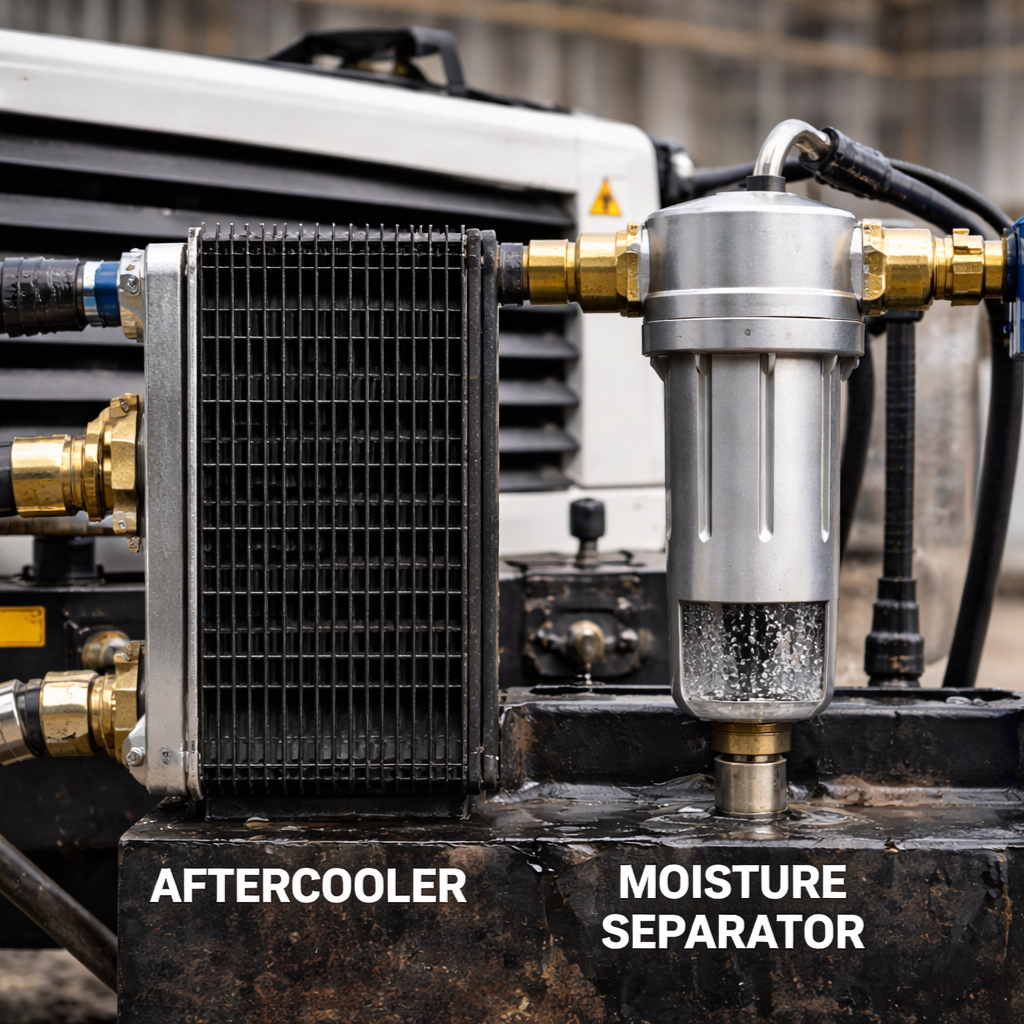
5. Aftercooler & Moisture Separation
Moisture is a big issue when blasting.
Without proper air treatment:
Media clumps
Blockages occur
Finish quality suffers
👉 Ideally choose a compressor with an aftercooler and moisture separator.
6. Portability & Site Use
Think about how the compressor will be used:
Road tow vs site tow
Weight (under/over 750kg)
Space on site
7. Future-Proofing
It’s often worth going slightly bigger:
Run larger nozzles later
Power multiple tools
Avoid running at 100% constantly
Choosing a Compressor by Nozzle Size
Below is a general guide based on common blasting nozzle sizes.
4.8mm Nozzle (3/16”)
Typical requirement: ~60–90 CFM @ 7 bar
Best for:
Light cleaning
Small parts
Occasional use
Pros:
Lower fuel usage
Smaller, lighter compressors
Limitations:
Slower blasting speed
Not ideal for heavy coatings

Compact, fuel-efficient Stage V compressor with Kubota reliability
Power Rating: ⭐⭐
The MDVN 22K Eco5 is the entry point into Rotair’s Stage V diesel range — compact, lightweight and efficient, yet powerful enough to deliver 71 CFM at pressures up to 12 bar. Driven by a robust Kubota 3-cylinder engine, it combines low fuel consumption with exceptional durability. Designed for contractors who need portable air on demand, the MDVN 22K offers easy towing, quick servicing via spin-on filters, and a rugged electro-galvanized chassis built to withstand years of tough site work.
Flow Rate:
71 CFM @ 6.5 bar
56 CFM @ 10 bar
50 CFM @ 12 bar
Everything you need to know about support, pricing, shipping and leasing.

Leasing available
High-pressure, compact air power for blasting and on-site tooling
Power Rating: ⭐⭐
The Rotair VRK 20 is a powerful, lightweight petrol compressor built for contractors and mobile technicians who need reliable high-pressure air in a compact footprint. Delivering up to 67 CFM at 6 bar, with options up to 13 bar, it’s ideal for small blasting setups, road maintenance tools, spray systems, rail, utilities and fleet support.
With its proven Honda GX690 engine, oversized cooling system and rugged frame, the VRK 20 offers the perfect balance of performance, portability and durability.
Flow Rate:
67 CFM @ 6 bar
45 CFM @ 11 bar
42 CFM @ 13 bar
Everything you need to know about support, pricing, shipping and leasing.

Leasing available
Compact, high-pressure air for blasting, tooling and mobile site work
Power Rating: ⭐⭐
The Rotair VRK 16 is a lightweight, petrol-driven compressor designed for contractors who need strong, reliable air delivery in a compact footprint. Producing up to 57 CFM at 6 bar, with 11 and 13 bar options, it’s ideal for light blasting, roadwork tools, spray applications, tyre inflation systems and mobile technicians needing a powerful but easy-to-transport unit.
Built around the proven Honda GX630 engine and Rotair’s efficient FIBRA cooling and separation system, the VRK 16 is tough, simple to maintain and ready for everyday site abuse.
Flow Rate:
57 CFM @ 6 bar
39 CFM @ 11 bar
34 CFM @ 13 bar
Everything you need to know about support, pricing, shipping and leasing.
6.4mm Nozzle (1/4”)
Typical requirement: ~100–150 CFM @ 7 bar
Best for:
General blasting work
Automotive and restoration
Small to medium jobs
This is one of the most popular setups.
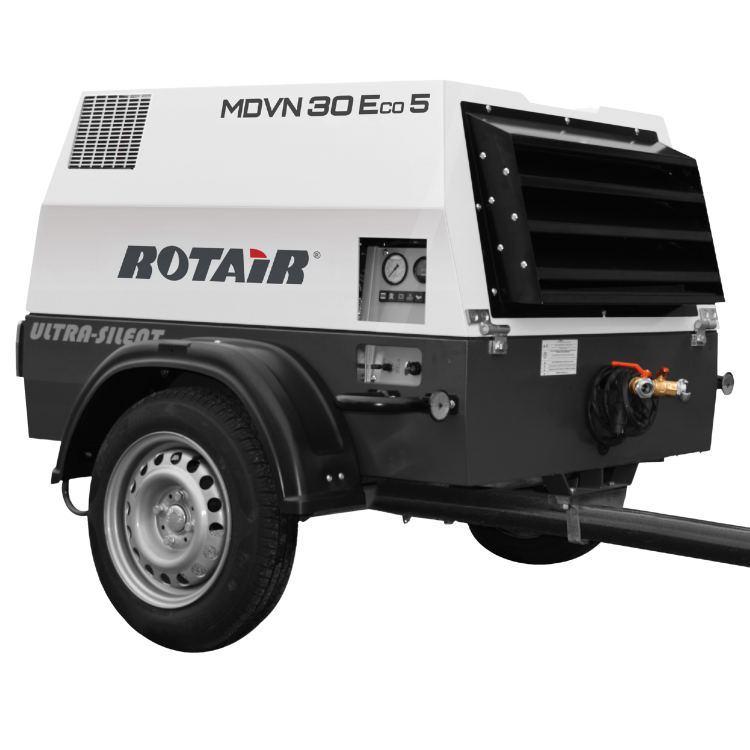
Compact, efficient airflow for industrial and contractor use
Power Rating: ⭐⭐⭐
The Rotair MDVN 30 Eco5 is a lightweight, fuel-efficient Stage V diesel compressor designed for contractors, maintenance teams and facilities needing reliable mid-range airflow. Delivering up to 104 CFM at 7 bar, it's ideal for small to medium pneumatic tools, light blasting, construction work, utilities, fibre installation and general site tasks.
Easy to tow, simple to maintain and built with Rotair’s proven intelligent controls, the MDVN 30 is a tough, economical choice for everyday site operations.
Flow Rate:
104 CFM @ 7 bar
67 CFM @ 10 bar
49 CFM @ 12 bar
Everything you need to know about support, pricing, shipping and leasing.

Leasing available
Reliable, compact and efficient — engineered to power blasting and industrial applications.
Power Rating: ⭐⭐⭐
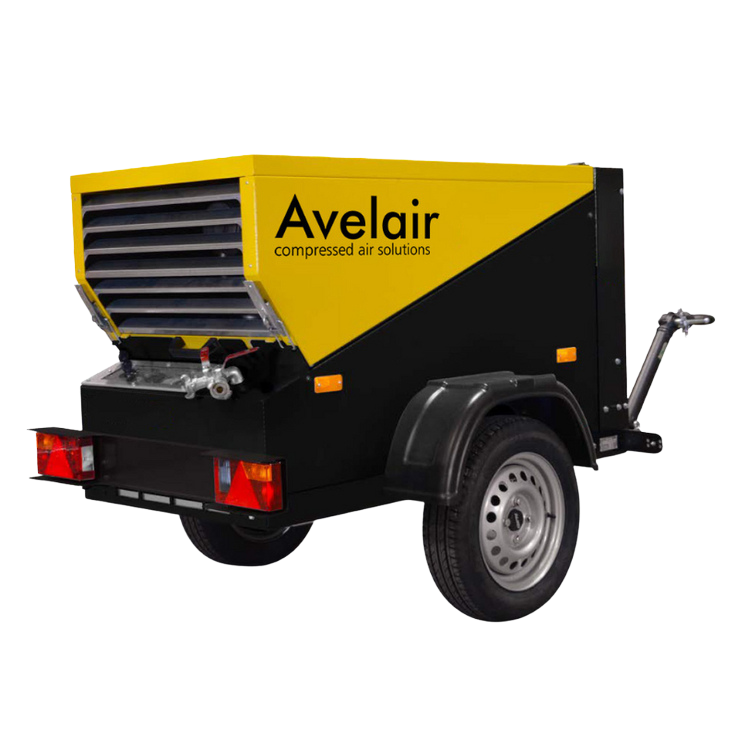
The Applied PDC105 is a portable diesel air compressor designed to deliver dependable performance in the toughest environments. Built with a highly reliable Perkins 3-cylinder engine and the precision-engineered Opti airend, it combines fuel efficiency, durability and low running costs in a compact unit.
Mounted on a Knott galvanised trailer chassis, the PDC105 is easy to move and built to last. With a flow rate of 105 cfm at 7 bar, it is the perfect match for applications such as sand blasting, shot blasting, dustless blasting, dry ice blasting, pneumatic tools and spray painting.
Flow Rate:
105 CFM @ 7 bar
Everything you need to know about support, pricing, shipping and leasing.
Leasing available
Reliable, compact and efficient — engineered to power blasting and on-site air needs
Power Rating: ⭐⭐⭐
Compact, efficient, and Stage V compliant – the Avelair AP3000 is a robust portable compressor designed for reliable performance in sand blasting, dry ice blasting, construction, and on-site air power applications. Powered by a fuel-efficient Kubota D1105 diesel engine, it delivers up to 105 cfm and up to 10 bar with progressive air regulation for precise control.
This model is supplied with a braked axle for safe towing and mobility, plus a factory-fitted aftercooler and cyclonic water separator. Together, these features ensure cleaner, drier air supply – essential for blasting applications – while also extending tool and equipment life.
Built with a soundproofed steel enclosure, low fuel consumption, and comprehensive safety monitoring, the AP3000 combines portability with industrial-grade performance.
Flow Rate:
105 CFM @ 7 bar
88 CFM @ 8.5 bar
75 CFM @ 10 bar
Everything you need to know about support, pricing, shipping and leasing.
8mm Nozzle (5/16”)
Typical requirement: ~170–220 CFM @ 7 bar
Best for:
Faster production
Heavier coatings
Industrial use
Pros:
Good balance of speed and control
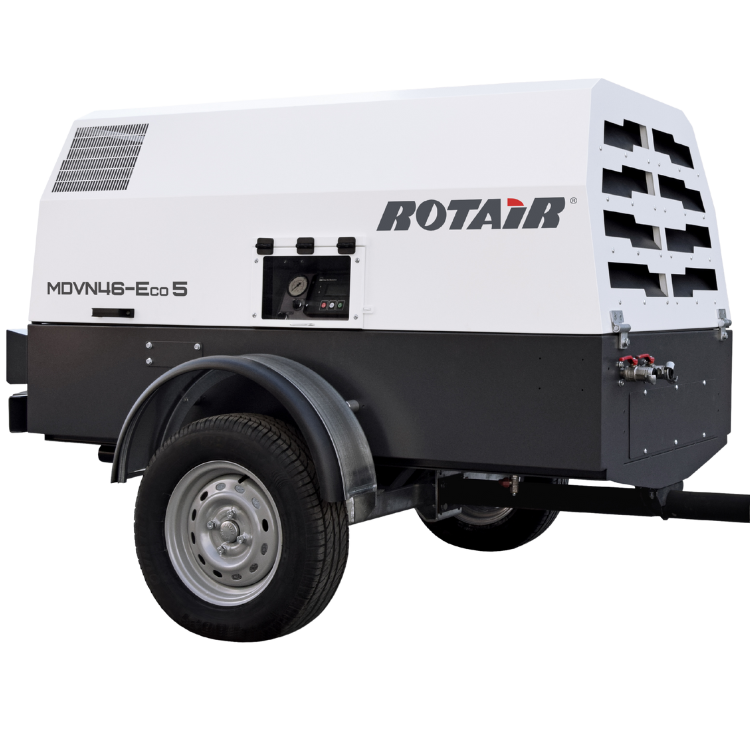
Mid-range Stage V diesel power for heavy duty applications
Power Rating: ⭐⭐⭐⭐
The MDVN 46 Eco5 strikes the perfect balance between size and performance. Powered by a Kohler turbocharged Stage V diesel engine, it delivers up to 159 CFM at 12 bar — more than enough for abrasive blasting rigs, multiple pneumatic tools, or continuous site operation. A direct drive system ensures durability and fuel efficiency, while oversized filters and radiators guarantee reliable cooling even in extreme conditions. Compact enough to be towed with ease, but tough enough for industrial work, this is a true all-rounder in the Rotair line-up.
Flow Rate:
159 CFM @ 7 bar
129 CFM @ 10 bar
125 CFM @ 12 bar
Everything you need to know about support, pricing, shipping and leasing.
Leasing available
Powerful, efficient and built for demanding applications — the air power you need, when you need it.
Power Rating: ⭐⭐⭐⭐
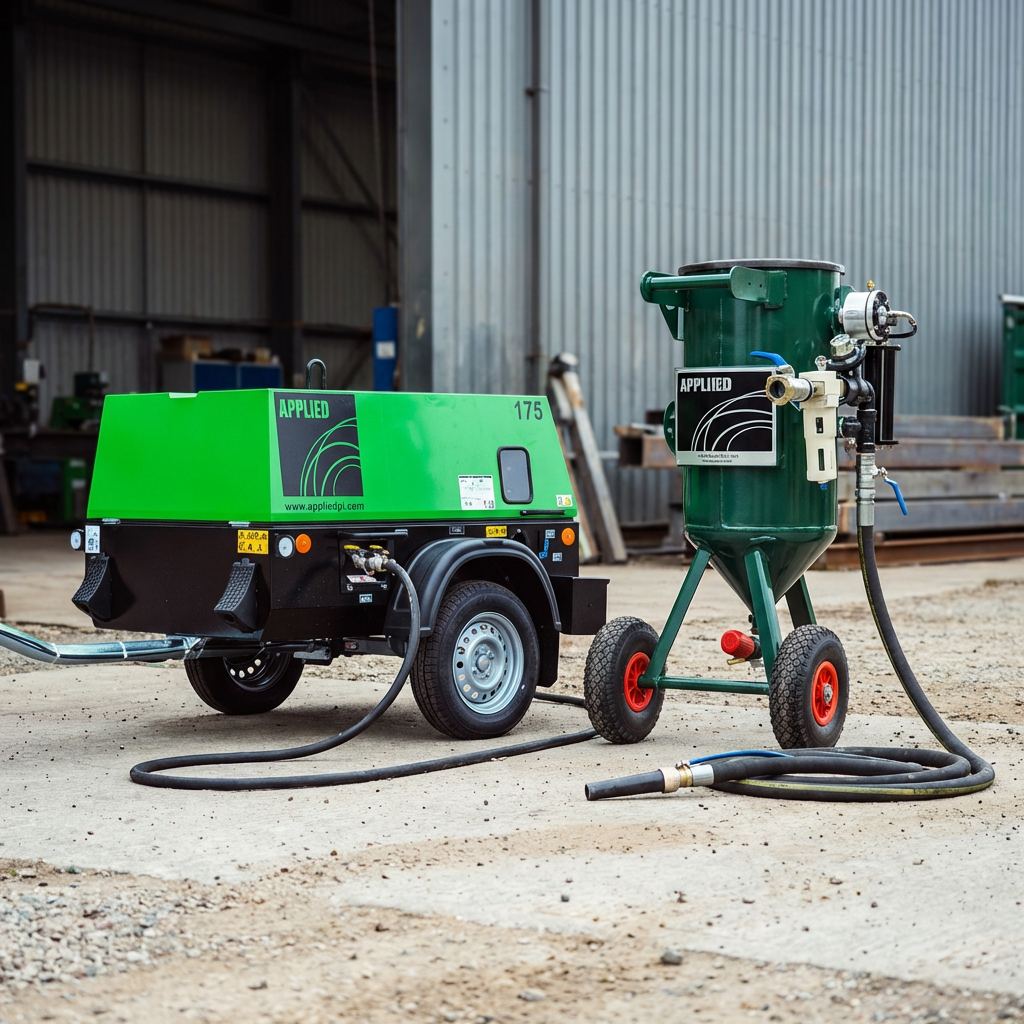
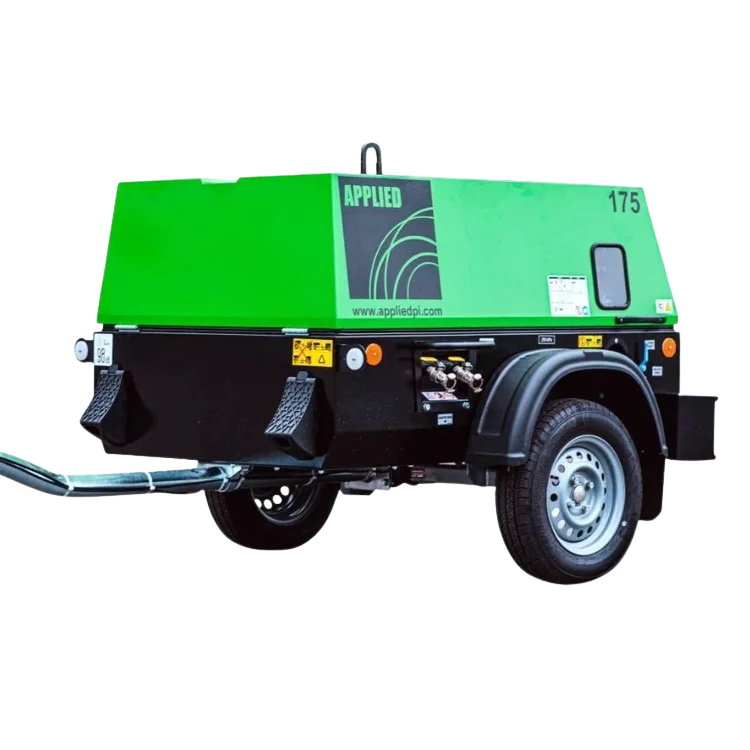
The Applied PDC175 is a high-output portable diesel air compressor delivering 175 cfm at 7 bar, making it the ideal choice for contractors and industrial users who require reliable compressed air for heavy-duty applications. Powered by a robust 4-cylinder Perkins diesel engine and precision-engineered Opti airend, it offers outstanding performance with fuel efficiency and low running costs.
Mounted on a durable Knott galvanised trailer chassis and protected by a strong steel enclosure, the PDC175 is engineered to perform in tough site conditions. Its built-in aftercooler with automatic condensate drain ensures clean, moisture-free air supply, making it especially well-suited for sand blasting, shot blasting, dustless blasting, and dry ice blasting applications.
Flow Rate:
175 CFM @ 7 bar
145 CFM @ 10 bar
Everything you need to know about support, pricing, shipping and leasing.
Leasing available
High-capacity, Stage V compliant air power for blasting and industrial use.
Power Rating: ⭐⭐⭐⭐
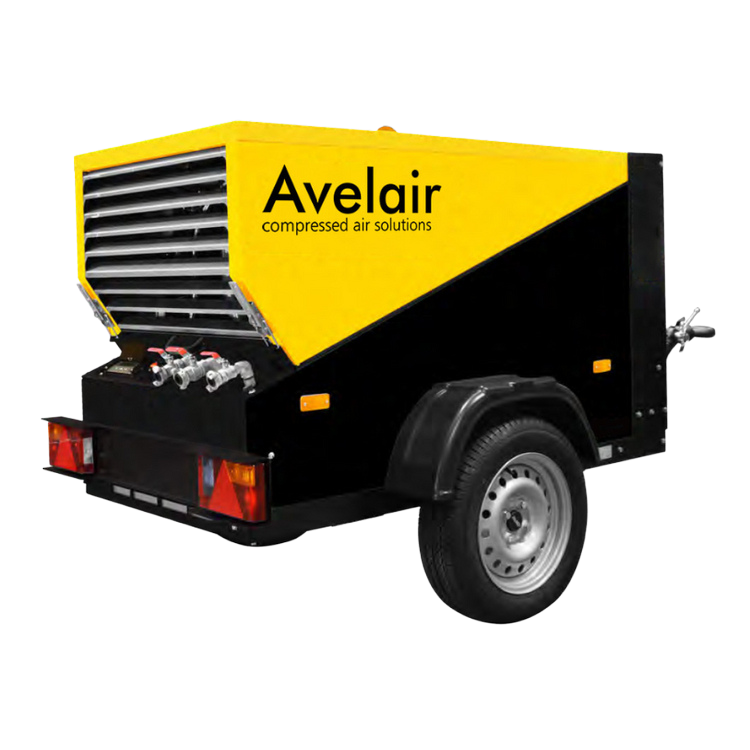
The Avelair AP5000 is a powerful and efficient portable compressor designed for demanding applications such as sand blasting, dry ice blasting, construction, and on-site air power. Delivering up to 180 cfm and up to 10 bar, it provides the high-volume airflow required for heavy-duty blasting and pneumatic tools.
This model comes equipped with a braked trailer for safe towing, along with a factory-fitted aftercooler and cyclonic water separator. This ensures clean, dry compressed air — essential for blasting media performance and equipment longevity.
Built with a Kubota Stage V diesel engine, progressive airflow regulation, and a rugged soundproofed steel enclosure, the AP5000 combines high output with reliable operation. With a weight above 750 kg (due to the integrated aftercooler), it requires the appropriate driving licence for towing.
Flow Rate:
180 CFM @ 7 bar
165 CFM @ 8.5 bar
148 CFM @ 10 bar
Everything you need to know about support, pricing, shipping and leasing.
9.5mm Nozzle (3/8”)
Typical requirement: ~250–320 CFM @ 7 bar
Best for:
Large surface areas
Thick coatings
Commercial blasting
Pros:
High productivity
Faster job completion
👉 Add your recommended compressors here

High-capacity Kubota diesel compressor built for the big jobs
Power Rating: ⭐⭐⭐⭐⭐
For operators who need serious air power, the MDVN 83 Eco5 delivers a massive 283 CFM at pressures up to 12 bar. With a 4-cylinder Kubota Stage V engine at its core, this compressor is designed for large-scale abrasive blasting, fibre optic cable blowing, and heavy industrial site work. Multiple air outlets allow flexible connection of different tools, while the fuel-saving pneumatic control system and large 140-litre tank provide excellent efficiency on long shifts. Rugged, reliable, and built to perform, the MDVN 83 is a workhorse for the most demanding applications.
Flow Rate:
283 CFM @ 7 bar
226 CFM @ 10 bar
198 CFM @ 12 bar
Everything you need to know about support, pricing, shipping and leasing.
Leasing available
Powerful, high-capacity and built for serious demand - industrial air power without compromise.
Power Rating: ⭐⭐⭐⭐⭐
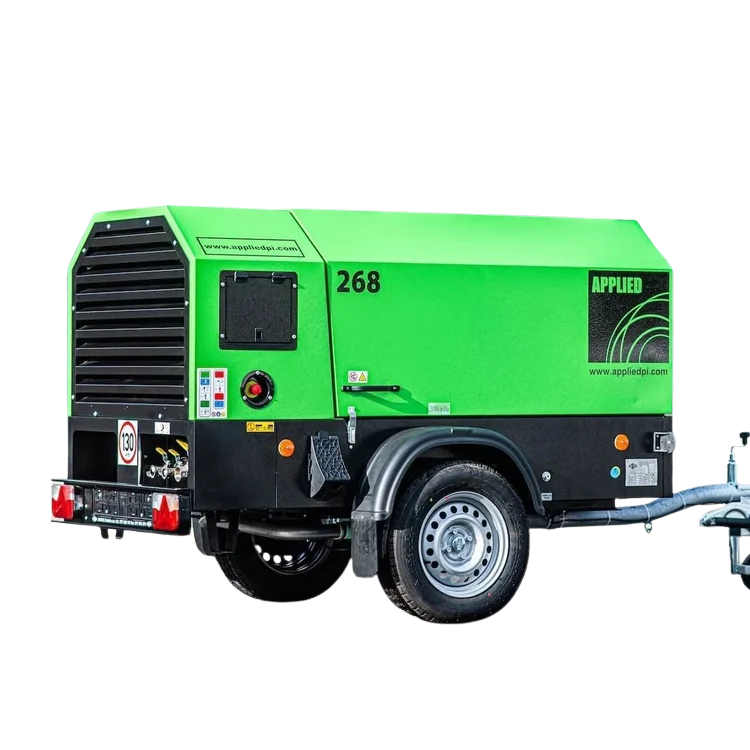
The Applied 268 is a heavy-duty mobile diesel air compressor delivering up to 268 cfm at 7–14 bar, making it ideal for contractors and industrial users who need a consistent, high-volume air supply for demanding applications. Powered by a reliable 4-cylinder Hatz diesel engine, it delivers dependable performance with excellent efficiency and long service life.
Built for tough site conditions, the Applied 268 features a robust steel enclosure and trailer-mounted design for easy transport and durability on site. A standard integrated air dryer ensures a clean, moisture-free air supply, making it perfectly suited to abrasive blasting, dustless blasting, dry ice blasting, cabinet systems, and high-air-demand tooling.
With multiple outlets — 2 × ¾” and 1 × 1½” — the compressor offers excellent flexibility, allowing multiple tools or blasting systems to run simultaneously. Designed to integrate seamlessly with Applied blasting equipment, the 268 delivers outstanding versatility across a wide range of industrial applications.
Flow Rate:
268 CFM @ 7 bar
229 CFM @ 10 bar
194 CFM @ 14 bar
Everything you need to know about support, pricing, shipping and leasing.
Leasing available
Flexible air power on the move — the world’s #1 PTO-driven compressor.
Power Rating: ⭐⭐⭐⭐⭐
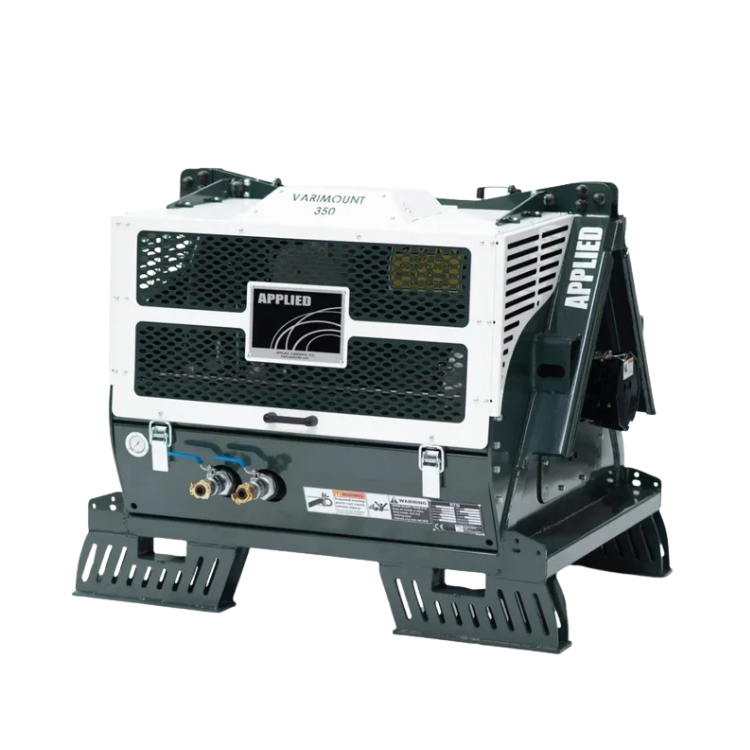
The Applied Varimount 350 is a best-selling PTO air compressor that delivers a powerful 350 cfm (5.0–10.2 m³/min) at 10 bar (145 psi), making it the most versatile solution for agriculture, construction and industrial sectors. Designed to be mounted on the front or rear of your tractor, it provides unbeatable flexibility and eliminates the hassle of towing a separate diesel compressor.
At its core is Applied’s patented MAGNUM air end, designed for maximum reliability and efficiency with virtually no wear. With a compact footprint, rugged construction, and easy maintenance design, the Varimount 350 delivers continuous, reliable compressed air whenever and wherever it’s needed — all while cutting emissions by using your tractor’s existing engine
Flow Rate:
350 CFM @ 10 bar
Everything you need to know about support, pricing, shipping and leasing.
One Tool vs Two Tool Setup
If you're running additional air tools alongside blasting:
Add extra CFM for each tool
Avoid running compressor at full capacity
👉 Example:
175 CFM for blasting
+20–30 CFM for tools
= You’ll need a larger compressor
Common Mistakes to Avoid
Choosing a compressor based on price, not airflow
Running a compressor at 100% capacity
Ignoring moisture control
Undersizing for the nozzle

Final Thoughts
For sandblasting, the compressor is the most important part of the setup.
If you're unsure:
Size based on your nozzle
Allow extra capacity
Choose a machine designed for continuous use
👉 Want to talk about our range of portable air compressors? Contact CoolBlast for expert advice.
Portable and Diesel Air Compressors Guides
Choosing a Portable Diesel Compressor
Air Requirements and Compressor Sizing

Maintenance & Servicing Guide for Compressors
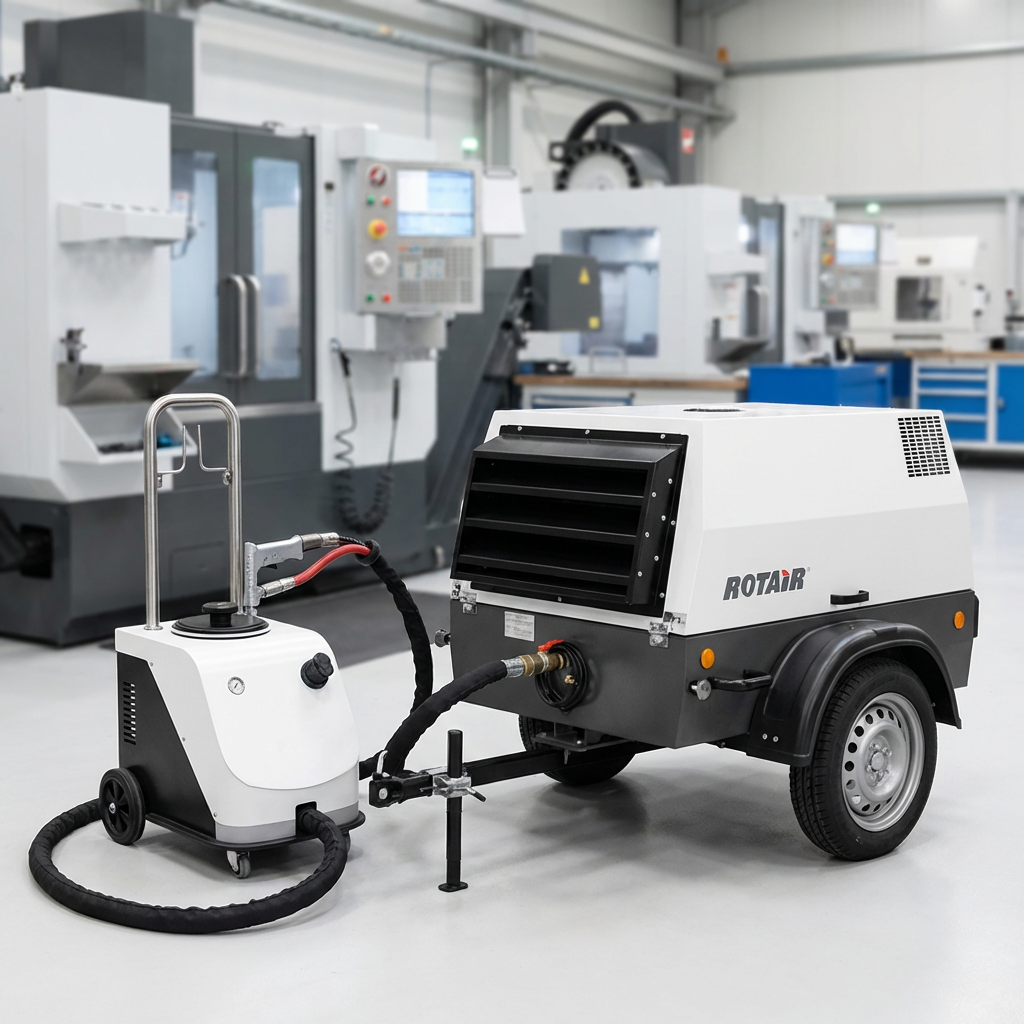
How to Size a Compressor Properly
Cheap vs Premium Diesel Compressors
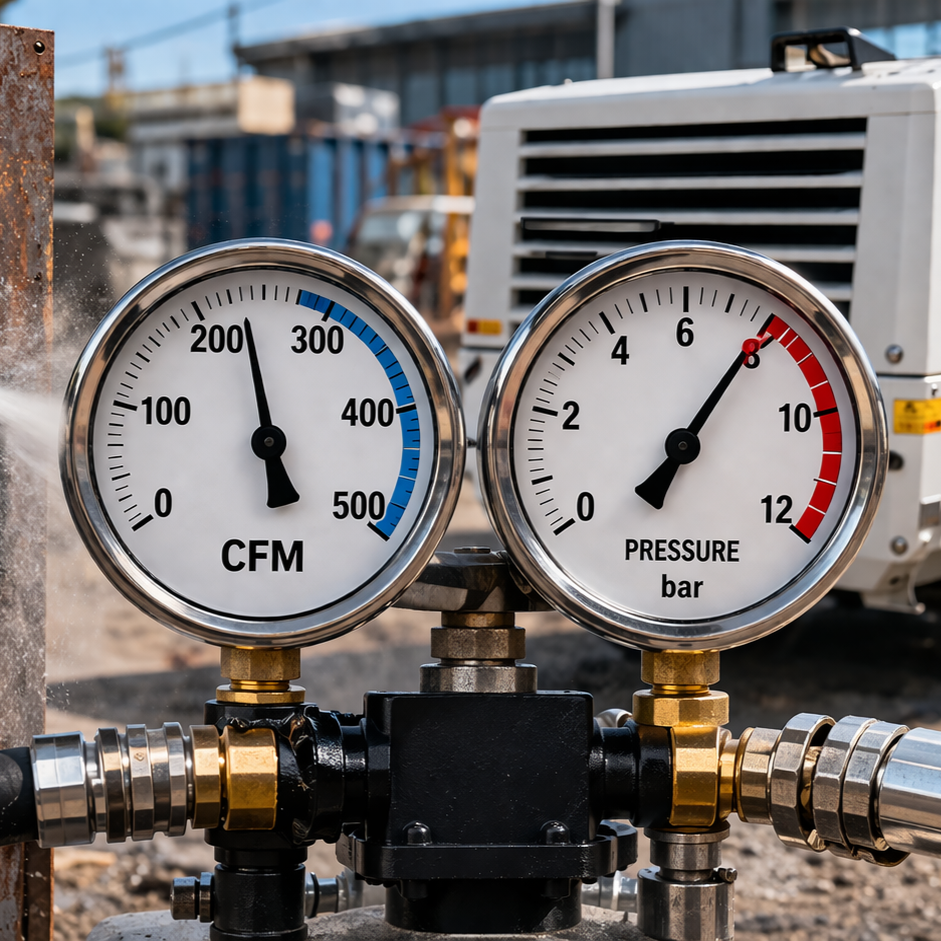
Airflow (CFM) vs Pressure (Bar)