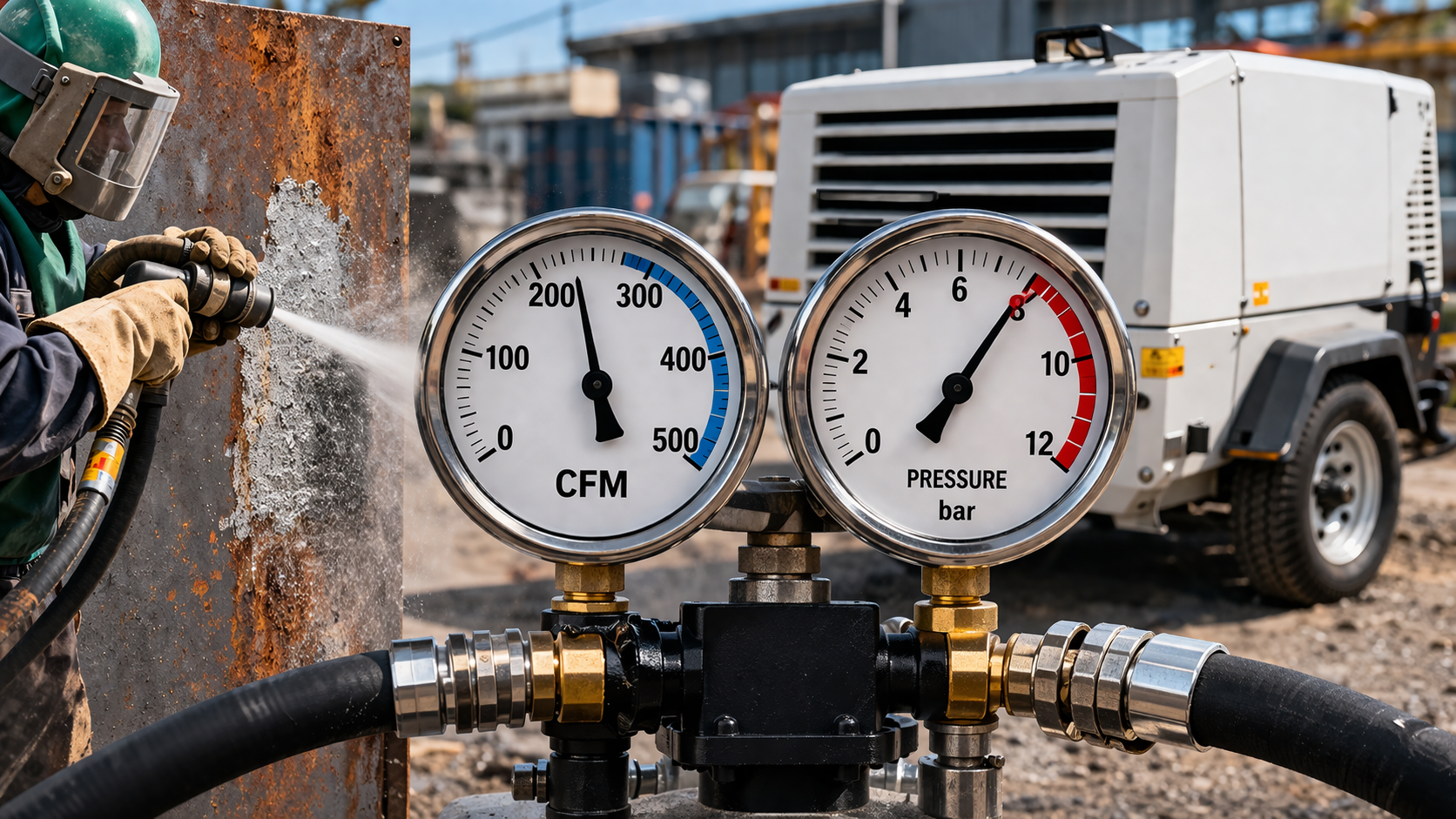
Airflow (CFM) vs Pressure (Bar) – What Actually Matters?
When choosing a compressor, most people focus on pressure (bar). But in reality, it’s airflow (CFM) that does most of the work.
Understanding how airflow and pressure work together is key to getting the right performance — whether you're sandblasting, dry ice blasting, or running air tools.
The Simple Explanation
Pressure (bar) = how hard the air is pushed
Airflow (CFM) = how much air is delivered
👉 You need both — but they do very different jobs.
What Does Pressure (Bar) Do?
Pressure is the force behind the air.
Higher pressure:
Increases impact force
Helps remove tougher coatings
Improves cutting or blasting power
Typical examples:
6–7 bar → general cleaning / blasting
8–10 bar → heavier coatings, rust, paint
👉 Think of pressure as the strength of the hit.
What Does Airflow (CFM) Do?
Airflow is the volume of air being delivered.
Higher airflow:
Increases cleaning speed
Allows larger nozzles
Keeps tools running consistently
Prevents pressure drop
👉 Think of airflow as the amount of work you can do.
Why Airflow Matters More Than Pressure
This is where most people get it wrong.
You can have high pressure, but if airflow is too low:
The compressor can’t keep up
Pressure drops during use
Performance becomes inconsistent
Example:
A small compressor at 10 bar but low CFM
👉 will struggle to run a blasting nozzleA larger compressor at 7 bar with high CFM
👉 will outperform it in real-world use
👉 For most applications, airflow is the limiting factor.
How They Work Together
You don’t choose one or the other — they work together.
Pressure provides the force
Airflow sustains that force
👉 The key is maintaining both at the same time under load
Real-World Blasting Example
Let’s say you’re using an 8mm nozzle:
Requires ~250 CFM at 7 bar
If your compressor:
Can hit 7 bar but only delivers 180 CFM
👉 performance drops immediately
If your compressor:
Delivers 250+ CFM at 7 bar
👉 you get full cleaning power
What Happens If You Get It Wrong
Too little airflow:
Pressure drops during use
Slow cleaning or tool performance
Equipment struggles to run
Too little pressure:
Not enough force to remove coatings
Reduced effectiveness
Common Misconceptions
“Higher bar means more power”
❌ Not on its own — without airflow, it means very little
“My compressor says 10 bar, so it’s powerful”
❌ Only if it can deliver enough CFM at that pressure
“CFM doesn’t matter for small jobs”
❌ It always matters — it controls consistency
What You Should Focus On
When choosing a compressor:
Start with CFM requirement (based on tool or nozzle)
Then check required pressure (bar)
Make sure the compressor can deliver both simultaneously
👉 Always size based on real working conditions, not just specs.
Quick Rule of Thumb
Airflow (CFM) = capacity / speed
Pressure (bar) = force / intensity
👉 If airflow is wrong → the job slows down
👉 If pressure is wrong → the job doesn’t work
Final Thoughts
Pressure gives you power.
Airflow lets you use it properly.
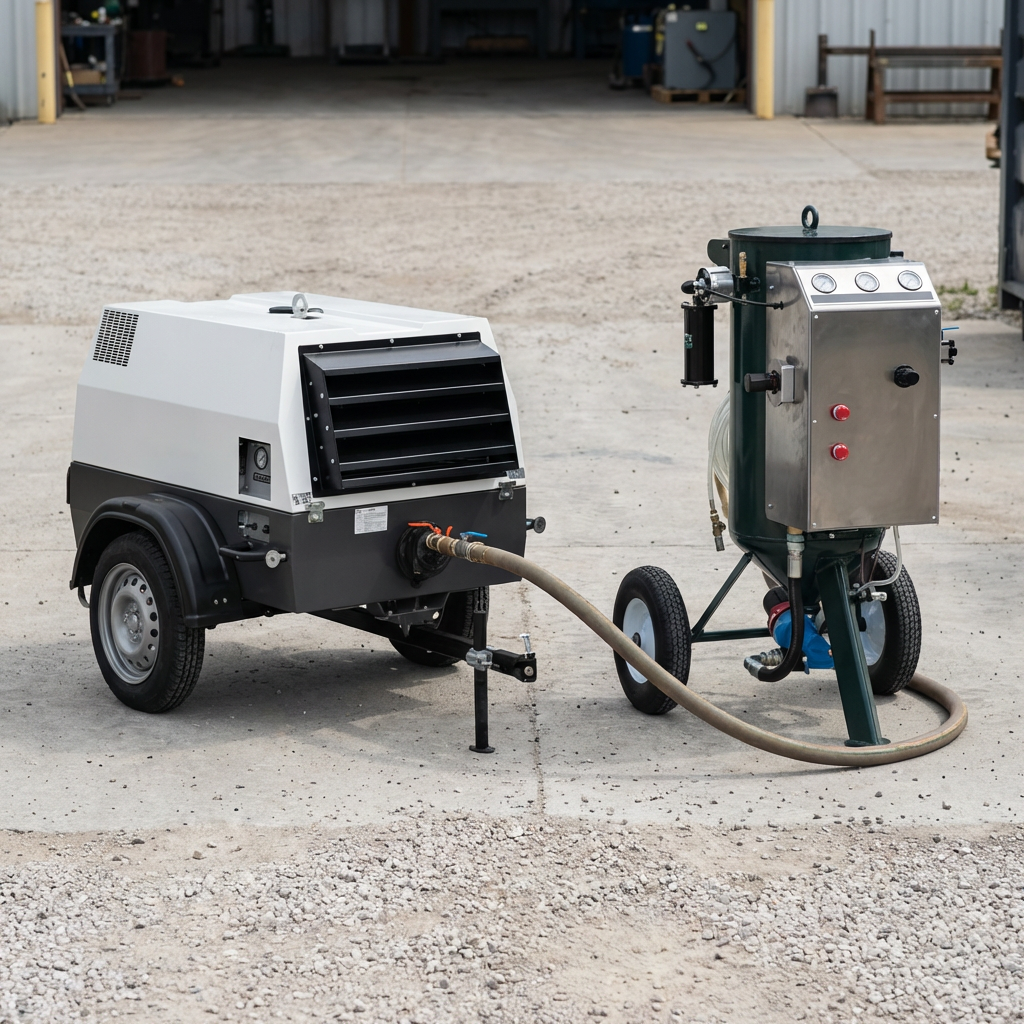
For most applications — especially blasting — airflow is the most important factor, with pressure supporting it.
👉 Want to talk about our range of compressors? Contact CoolBlast for expert advice.
Portable and Diesel Air Compressors Guides
Choosing a Portable Diesel Compressor
Air Requirements and Compressor Sizing

Maintenance & Servicing Guide for Compressors
Best Diesel Air Compressors for Sandblasting
How to Size a Compressor Properly
Cheap vs Premium Diesel Compressors