
Buyer’s Guide to Abrasives for SABIX 8 & Pressure Base
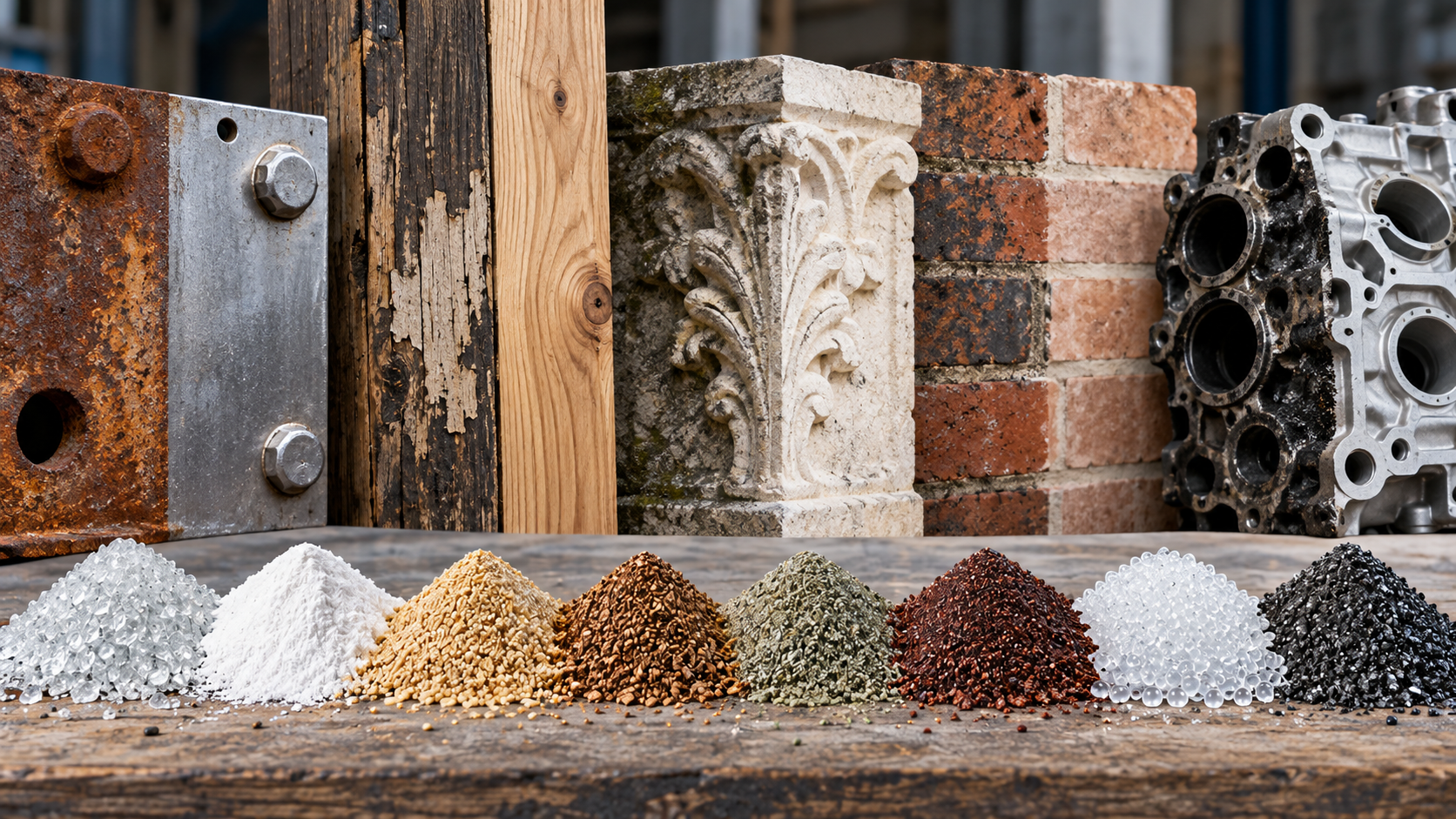
Choosing the correct blasting abrasive is just as important as choosing the right blasting machine.
Different media vary considerably in hardness, cutting ability and the finish they leave behind. The right choice depends on what you are trying to remove, the material underneath and whether you want to clean, strip, profile or finish the surface.
This guide covers the main abrasives suitable for use with the FEVI SABIX 8 and FEVI Pressure Base, from gentle organic media through to more aggressive abrasives for rust and coating removal.
1. Quick Abrasive Selection Guide
General rust and paint removal
Crushed glass
Heavy rust and coatings on steel
Olivine, garnet or aluminium oxide
Delicate automotive components
Sodium bicarbonate
Aluminium
Sodium bicarbonate, crushed glass or glass bead
Stainless steel
Crushed glass or glass bead
Timber beams and furniture
Corn cob or nut shell
Delicate timber restoration
Corn cob
Engine components and carbon deposits
Nut shell or sodium bicarbonate
Stone and brick cleaning
Crushed glass, olivine or sodium bicarbonate
Delicate stone and restoration work
Sodium bicarbonate or fine crushed glass
Surface preparation before coating
Garnet or aluminium oxide
Satin finishing metal
Glass bead
Always test the abrasive and pressure on a small inconspicuous area before treating the full surface.
2. Crushed Glass – Best General-Purpose Abrasive
Best for: Rust, paint, metal, aluminium, stainless steel, wood, brick and stone.
Crushed glass is one of the most versatile abrasives for the SABIX 8 and is a good starting point for many general blasting jobs.
Its angular particles provide a useful cutting action without being as aggressive as aluminium oxide.
It can be used for:
Removing light to moderate rust
Paint and coating removal
Cleaning steel components
Aluminium and stainless steel
Timber
Brick and masonry
Stone cleaning
For customers wanting one abrasive capable of handling a wide variety of jobs, crushed glass would normally be our first recommendation.
3. Sodium Bicarbonate – For Delicate Cleaning
Best for: Automotive components, engines, aluminium, delicate surfaces and light paint removal.
Sodium bicarbonate – commonly known as soda blasting media – is a considerably softer abrasive than mineral blasting media.
Rather than aggressively profiling the surface, it is particularly useful where contamination or coatings need to be removed while minimising damage to the underlying material.
Typical applications include:
Engine components
Aluminium components
Automotive restoration
Industrial moulds
Light paint removal
Delicate stone and restoration work
Sodium bicarbonate is also water soluble, making residue easier to remove in suitable applications.
It is not generally the first choice where a strong surface profile is required before applying a protective coating.
4. Corn Cob – For Timber and Restoration
Best for: Timber beams, furniture, wooden boats, fibreglass and delicate restoration.
Ground corn cob is a soft, biodegradable blasting medium particularly useful for timber restoration.
Because it is much softer and more elastic than mineral abrasives, it can remove coatings and surface contamination while reducing the risk of aggressively cutting into the timber.
Typical applications include:
Oak beams
Timber frames
Doors and furniture
Removing old finishes
Cleaning weathered timber
Wooden boats
Fibreglass
Delicate aluminium
For restoration contractors working extensively with timber, corn cob is one of the most useful abrasives to consider with the SABIX 8.
5. Nut Shell – Gentle Cleaning with More Bite
Best for: Engines, carbon deposits, moulds, wood and sensitive components.
Ground nut shell is another natural blasting medium suited to applications where conventional mineral abrasives may be too aggressive.
It is particularly useful for removing deposits without significantly affecting the material underneath.
Applications include:
Carbon deposits
Engine components
Industrial moulds
Sensitive metal components
Timber
Statues and restoration work
Plastic deburring
As a simple rule, we would generally favour corn cob for timber restoration and nut shell for components, carbon deposits and industrial cleaning.
6. Olivine – For Stronger Cleaning
Best for: Rust, coatings, steel, machinery, concrete, stone and heavier restoration work.
Olivine is a natural mineral abrasive offering greater cutting ability than softer media such as bicarbonate or organic abrasives.
It is useful where more material needs to be removed but an aggressive specialist abrasive such as aluminium oxide is not necessarily required.
Typical applications include:
Rusted steel
Machinery
Agricultural equipment
Paint and coating removal
Stone
Concrete
General surface preparation
It makes a useful step up from crushed glass where a stronger abrasive action is required.
7. Garnet – Heavy Rust and Surface Preparation
Best for: Steel, heavy rust, coatings and preparing surfaces before painting.
Garnet is a hard natural mineral abrasive with strong cutting performance.
It is particularly useful for:
Heavy rust
Mill scale
Thick coatings
Steel preparation
Machinery
Structural components
Preparing steel before protective coatings
Garnet is more durable than many expendable blasting abrasives, which can also make it particularly attractive for applications where abrasive can be recovered and reused.
8. Glass Bead – Cleaning and Finishing
Best for: Aluminium, stainless steel and metal components where a smooth satin finish is wanted.
Glass bead works differently from angular abrasives such as crushed glass.
The rounded particles provide more of a peening and cleaning action rather than aggressively cutting the surface.
This makes glass bead particularly useful for:
Aluminium components
Stainless steel
Engine components
Cleaning machined parts
Cosmetic finishing
Producing a uniform satin finish
Glass bead is particularly well suited to recovery blasting with the Pressure Base, where the abrasive can be collected, separated from debris and reused.
It would not normally be our first choice for removing heavy rust or thick coatings.
9. Aluminium Oxide – The Aggressive Option
Best for: Heavy rust, tough coatings and producing a surface profile before coating.
Aluminium oxide – also known as corundum – is one of the hardest abrasives commonly used for blasting.
Its aggressive cutting action makes it suitable for:
Heavy corrosion
Removing stubborn coatings
Steel components
Deburring
Surface preparation
Creating a profile before paint or protective coating
Its durability also makes aluminium oxide particularly suitable for machines where the abrasive is recovered and reused.
For general restoration work it can be unnecessarily aggressive, so crushed glass, olivine or a softer abrasive may be preferable.
10. SABIX 8 or Pressure Base?
Both machines can perform a wide variety of surface treatments, but they are designed around different ways of working.
SABIX 8
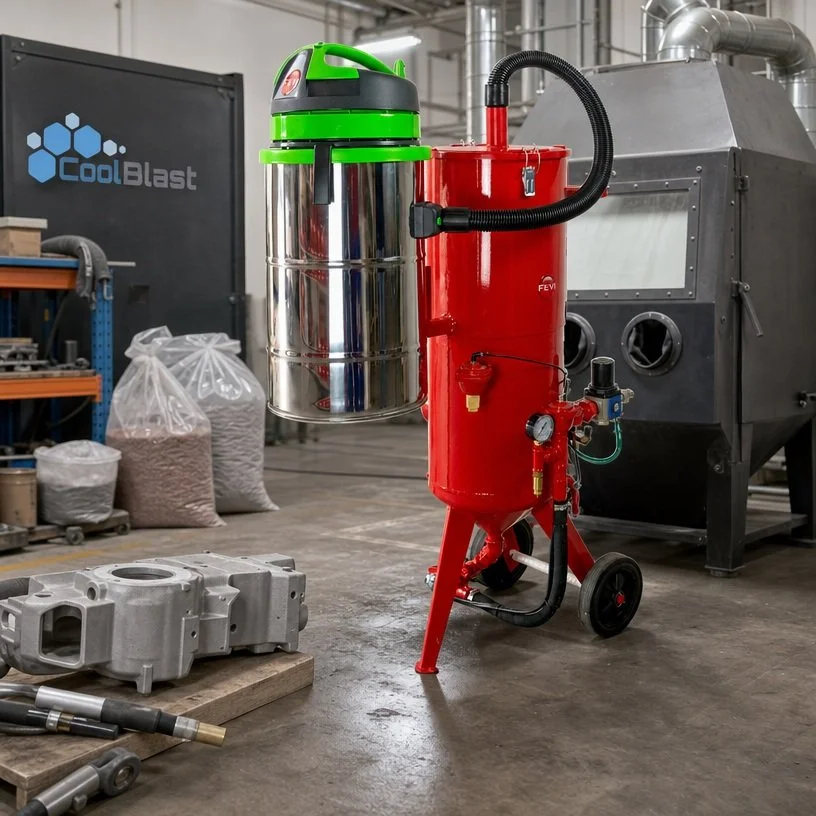
The SABIX 8 is a portable free-blast machine particularly suited to restoration, maintenance and jobs where you need flexibility over the area being treated.
It is ideal for:
Timber
Stone
Brick
Metal components
Machinery
Restoration
Irregular surfaces
Larger areas
Its adjustable blasting pressure also allows the operator to start gently and progressively increase the cleaning action.
Pressure Base
The Pressure Base combines pressure blasting with abrasive recovery and dust extraction.
A brush surrounding the blasting head sits against the surface while the machine recovers abrasive and debris.
This makes it particularly useful for:
Indoor work
Workshops
Localised repairs
Weld cleaning
Metal components
Stone and architectural features
Areas where abrasive spread needs to be minimised
Jobs where reusable abrasive can reduce consumption
Because the recovery head needs to remain against the surface, the Pressure Base is generally better for localised and reasonably accessible surfaces, while the SABIX is more versatile for irregular shapes and larger free-blasting jobs.
11. Match Pressure to the Surface
The abrasive is only part of the equation.
Blasting pressure has a major effect on how aggressive the process becomes. The same abrasive can behave very differently at low and high pressure.
For delicate surfaces:
Start with a softer or finer abrasive
Begin at low pressure
Test a small area
Increase pressure gradually until the required result is achieved
This is particularly important when working with:
Timber
Historic brick
Natural stone
Aluminium
Thin metal
Decorative surfaces
More pressure is not always better. The aim is to find the lowest pressure and least aggressive abrasive that achieves the required result efficiently.
12. Abrasive Recovery
The SABIX 8 is normally used as a free-blast machine, meaning the abrasive is discharged into the working area.
The Pressure Base is different. Its extraction system recovers the abrasive, separates reusable media from the removed material and feeds suitable abrasive back into the process.
Durable abrasives such as:
Aluminium oxide
Garnet
Glass bead
are particularly attractive for recovery applications because they can survive repeated impacts better than softer or more friable media.
Recovery can considerably reduce abrasive consumption on suitable jobs.
13. A Note About 'Sand' Blasting
Despite the common term sand blasting, ordinary sand containing free crystalline silica should not be used as blasting abrasive in the UK.
Modern blasting uses purpose-made media such as crushed glass, garnet, olivine, aluminium oxide, bicarbonate and organic abrasives instead.
Always check the abrasive Safety Data Sheet and carry out the appropriate COSHH assessment before use.
Final Thoughts
Crushed glass – best all-round choice for general cleaning, rust and paint.
Sodium bicarbonate – best for delicate surfaces and automotive components.
Corn cob – excellent for timber and restoration.
Nut shell – ideal for carbon deposits and sensitive components.
Olivine – stronger general-purpose rust and coating removal.
Garnet – heavy rust and professional surface preparation.
Glass bead – cleaning and satin finishing, particularly useful with recovery systems.
Aluminium oxide – hardest-hitting option for heavy removal and surface profiling.
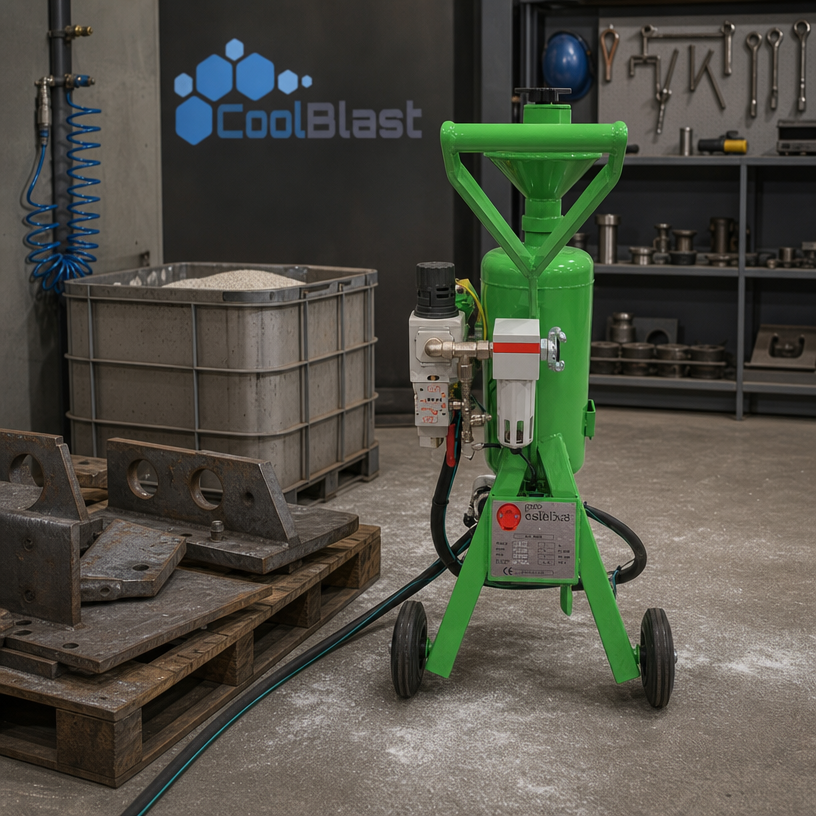
SABIX 8 – best where flexibility, low-pressure control and free blasting are required.
Pressure Base – best for localised work where dust control and abrasive recovery are priorities.
👉 Not sure which abrasive to use? Contact CoolBlast with details of the material, what you need to remove and the finish you want to achieve. We can advise on the abrasive, blasting pressure and compressor required for your application.
