
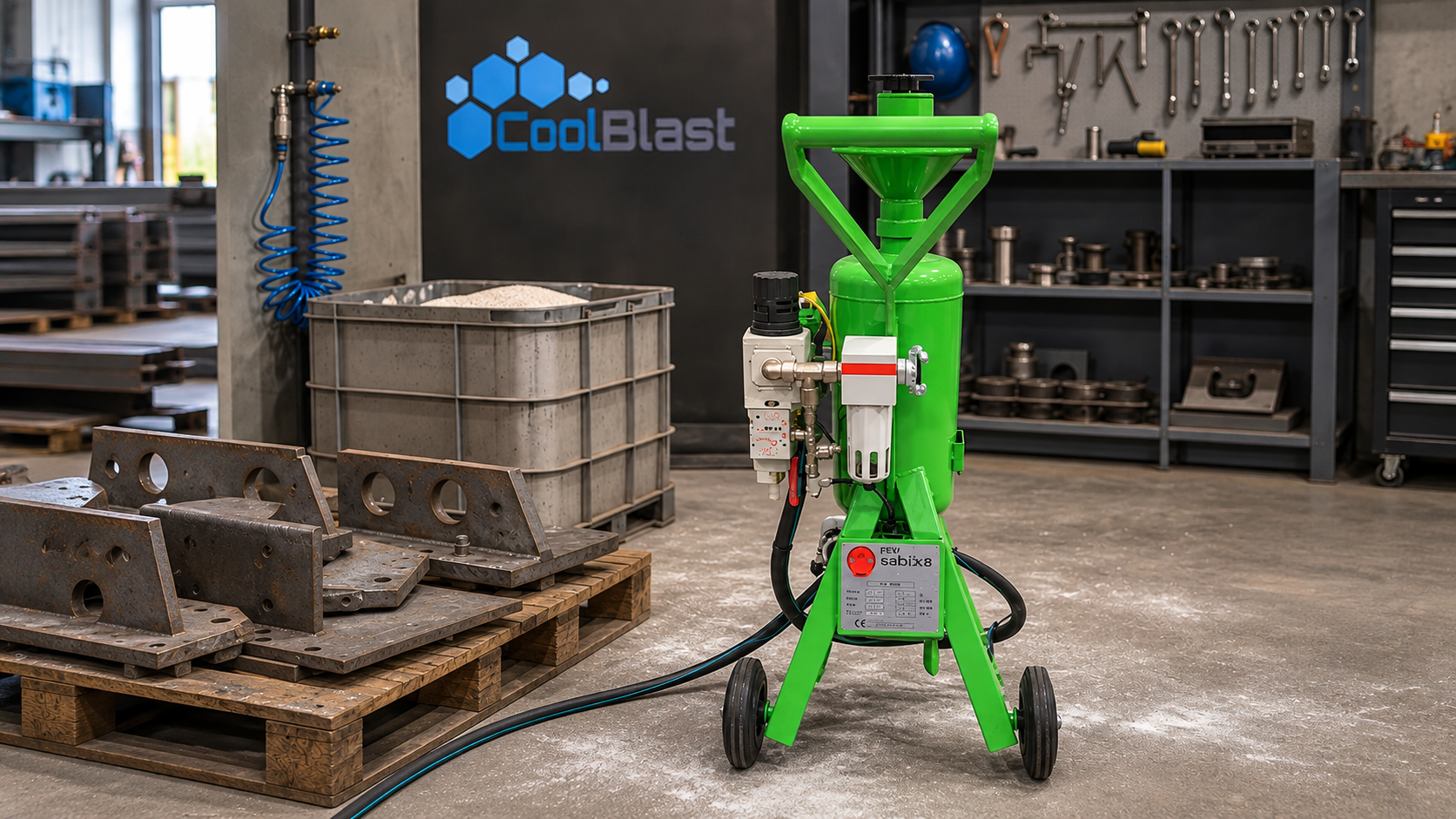
Guide to Low-Pressure Sandblasting
Low-pressure sandblasting gives the operator greater control when cleaning, stripping or restoring surfaces that could be damaged by aggressive conventional blasting.
This guide explains when to use low-pressure blasting, how to choose the right pressure and abrasive, and which surfaces and applications it works best on.
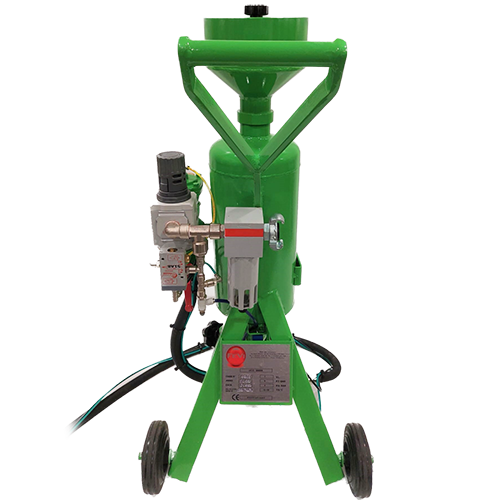
1. What is low-pressure sandblasting?
Low-pressure sandblasting uses the same basic principle as conventional abrasive blasting, but the air pressure is deliberately reduced to create a less aggressive blast.
Rather than simply using maximum pressure, the operator balances:
Air pressure
Abrasive type
Abrasive size
Abrasive flow
Nozzle distance
Surface condition
This allows contamination, coatings and corrosion to be removed progressively while reducing the risk of damaging the underlying material.
There is no single pressure that defines “low-pressure blasting”. The correct setting depends heavily on the surface and abrasive being used.
2. Why use lower blasting pressure?
Reducing pressure gives the operator more control over how aggressively the abrasive hits the surface.
This can be particularly useful when working with:
Timber
Stone and masonry
Brick
Architectural surfaces
Classic vehicle components
Thin or delicate metalwork
Glass and decorative surfaces
Restoration projects
Starting gently and gradually increasing the pressure is usually preferable to starting too aggressively and damaging the substrate.
3. Typical low-pressure blasting applications
Wood restoration
Remove paint, varnish and weathered finishes from beams, doors, furniture and timber structures while reducing excessive damage to the grain.
Stone & masonry
Remove dirt, deposits, coatings and surface contamination from suitable stone, brick and masonry.
Metal restoration
Remove rust, oxidation and coatings from components where maximum blasting power isn't required.
Classic vehicles
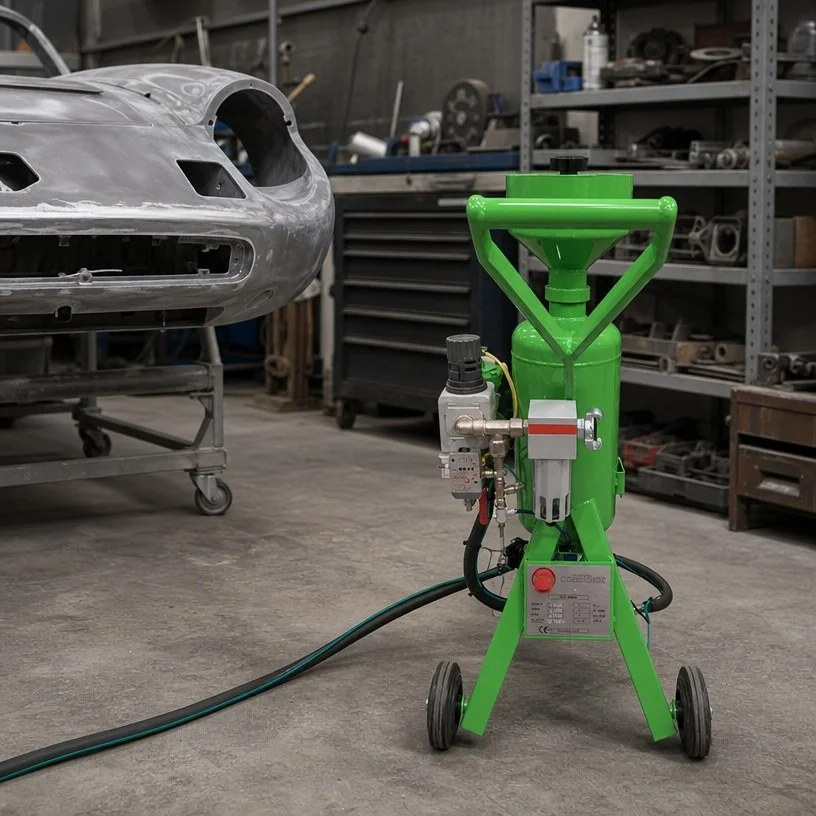
Useful for components, chassis parts, suspension pieces and other suitable restoration work where better control is desirable.
Architectural restoration
Clean façades, decorative stonework and heritage surfaces where aggressive blasting could damage the original material.
Swimming pools & tiled surfaces
Controlled removal of limescale, mineral deposits and surface contamination from suitable tiles, grout and pool surrounds.
Decorative blasting
Suitable for engraving, texturing and finishing stone, marble, glass and other materials when correctly configured.
FEVI specifically positions the Sabix 8 for restoration, wood, metal, stone, marble, façades and controlled surface preparation.
4. Choosing the right blasting pressure
There is no single correct pressure for every job. The safest approach is to start low and increase gradually until you get the cleaning or stripping performance you need.
Delicate timber – start at very low pressure and increase carefully
Stone & masonry – low to medium pressure depending on hardness and condition
Older or softer brick – start low to reduce the risk of surface damage
Limescale & mineral deposits – low to medium pressure with a suitable abrasive
Light rust – medium pressure is usually a good starting point
Heavy rust & paint – medium to higher pressure may be required
Steel preparation – higher pressure can be used where the substrate allows
Glass & engraving – very low pressure with fine abrasive
These are starting points rather than fixed settings. Always test on a small, inconspicuous area first.
A hard abrasive at low pressure can still be more aggressive than a softer abrasive at a higher pressure, so pressure and abrasive should always be considered together.
5. Choosing the right abrasive
The abrasive often makes as much difference as the pressure.
Sodium bicarbonate
Very gentle cleaning with minimal surface profiling. Useful for delicate surfaces and light contamination.
Corn cob & nut shell
Soft abrasives suitable for timber, restoration and applications where protecting the substrate is particularly important.
Glass bead
Provides controlled cleaning and a smooth finish on suitable metal surfaces.
Crushed glass
A useful general-purpose abrasive for coatings, rust and surface preparation.
Garnet
Good cutting performance for coatings and corrosion on harder surfaces.
Olivine
A mineral abrasive suitable for general cleaning and surface preparation.
Aluminium oxide
A hard, aggressive abrasive suited to more demanding rust, coating and metal preparation work.
The finer and more delicate the application, the more important accurate abrasive metering becomes.
6. Airflow matters as much as pressure
A common mistake is to concentrate only on compressor pressure.
A compressor might produce 8 bar, but that doesn't necessarily mean it can supply enough air to maintain that pressure while blasting.
You need to consider:
Compressor FAD / actual delivered airflow
Required working pressure
Nozzle diameter
Hose size
Pressure losses
Continuous rather than peak compressor output
For example, the FEVI Sabix 8 Base consumes approximately 550 litres/minute, or 19.4 CFM, at 7 bar with its standard 3 mm nozzle. FEVI specifically says compressor selection should be based on the airflow actually delivered at working pressure, rather than just motor power or receiver size.
A compressor advertised as 14 CFM displacement may therefore deliver considerably less usable air at the nozzle.
7. Keep your compressed air dry
Moisture is one of the biggest problems when using fine blasting abrasives.
Warm compressed air can produce condensation as it travels through the hose and cools.
Moisture can cause abrasive to:
Clump
Bridge inside the blast pot
Feed inconsistently
Block valves or hoses
Produce an inconsistent blast
Depending on the compressor and working conditions, consider using:
Moisture separators
Aftercoolers
Additional filtration
Refrigerated air dryers
Dry air becomes particularly important when using very fine abrasive.
8. Low pressure doesn't always mean low dust
Dry abrasive blasting can still produce significant airborne dust even when operating at reduced pressure.
For applications where dust needs to be controlled, a water humidification system can help.
The optional AcquaBlast system for the Sabix 8 introduces water into the blast stream to reduce airborne dust, although this does not make blasting completely dust-free.
Wet/damp blasting may be particularly useful for:
Stonework
Masonry
Outdoor restoration
Building façades
Pool surrounds
Jobs in sensitive locations
9. Technique makes a big difference
Low-pressure blasting works best when the operator adjusts the complete process rather than pressure alone.
Consider:
Start low
Increase pressure gradually until you achieve the required cleaning rate.
Test first
Always perform a small test patch before treating the full surface.
Keep the nozzle moving
Holding the blast in one place can damage even relatively hard materials.
Adjust your distance
Moving closer increases blast intensity; moving further away softens the effect.
Use the least aggressive abrasive that works
This gives you a larger margin for error on delicate substrates.
Reduce abrasive flow where possible
More abrasive doesn't automatically mean faster cleaning.
10. Sabix 8 Base or Sabix 8 VR?
The FEVI Sabix 8 is designed specifically around controlled, low-pressure blasting and can be adjusted from approximately 0.5 to 7.8 bar.
Sabix 8 Base
Best for general professional blasting and restoration including:
Metal
Wood
Stone
Brick
Paint removal
Rust removal
General surface preparation
Sabix 8 VR
Better suited to:
Conservation work
Very fine abrasives
Microblasting
Delicate stonework
Detailed restoration
The VR adds a pneumatic abrasive tank vibrator and more precise abrasive regulation, helping very fine media flow consistently.
11. When is low-pressure blasting not the best option?
Low-pressure blasting isn't designed to replace heavy-duty conventional blasting.
For jobs such as:
Large structural steel
Heavy corrosion
Thick industrial coatings
Large steel fabrications
High-production blasting
a larger blast pot, bigger nozzle and higher-output compressor will usually be considerably faster.
Low-pressure machines are about control, portability and versatility rather than maximum production rate.
12. Safety & PPE
Lower pressure does not remove the hazards associated with abrasive blasting.
Appropriate protection may include:
Suitable blasting helmet or respiratory protection
Eye and face protection
Hearing protection
Gloves
Protective clothing
Suitable ventilation or dust control
The abrasive and material being blasted should also be assessed for any hazardous dust that could be generated.
Final Thoughts
Low-pressure blasting gives greater control on sensitive surfaces.
Always balance pressure, abrasive and nozzle distance rather than considering pressure alone.
Start at low pressure and increase gradually.
Match the abrasive to the surface and contamination.
Ensure the compressor supplies sufficient actual airflow at working pressure.
Dry compressed air improves abrasive flow and reliability.
Low-pressure blasting is particularly suited to restoration, timber, stone, masonry and lighter metalwork.
For heavy industrial blasting, a larger conventional system will normally be faster.
👉 Need help choosing a low-pressure blasting setup?
